
Japanify

Lesson 8: 屋台はどこにあるか知っていますか – Do You Know Where the Food Stalls Are?

Asking About Event Information

In this lesson, you will learn how to ask questions about event details such as time, location, participation conditions, and announcements. You will practice using grammar patterns like 'もう V-ました' and 'まだ V-ていません' to inquire if events have started or ended, and learn to understand announcements and social media posts related to local events.
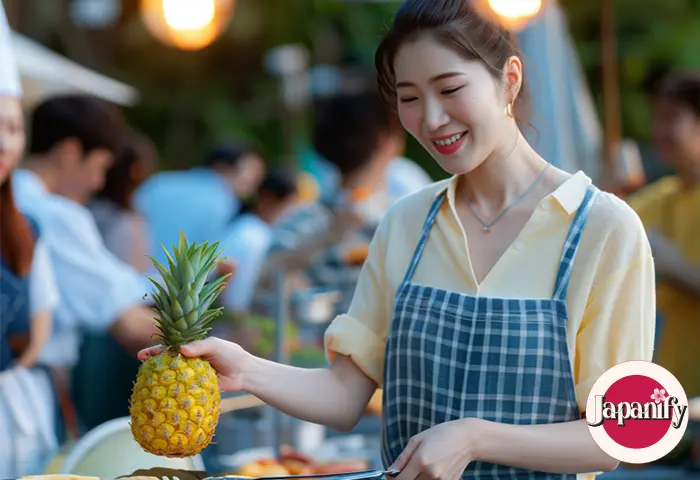
Lesson 8: 屋台はどこにあるか知っていますか – Do You Know Where the Food Stalls Are? image

Key topics:

  • ・Reading event flyers and programs
  • ・Asking about event time and location
  • ・Inquiring about participation conditions
  • ・Understanding event announcements
  • ・Reading and writing social media posts about events

Vocabulary

1
えんりょする
enryo suru
遠慮えんりょする
(to) be asked not to
Example
ここでのしゃしんさつえいはご遠慮えんりょください.
Koko de no shashin satsuei wa goenryo kudasai.
Please refrain from taking photos here.
2
きょうりょくする
kyōryoku suru
協力きょうりょくする
(to) cooperate
Example
ゴミのぶんべつに協力きょうりょくしてください.
Gomi no bunbetsu ni kyōryoku shite kudasai.
Please cooperate with garbage separation.
3
しゅうりょうする
shūryō suru
終了しゅうりょうする
to end
Example
イベントはごご5じに終了しゅうりょうします.
Ibento wa gogo go-ji ni shūryō shimasu.
The event ends at 5 PM.
4
せっていする
settei suru
設定せっていする
to set
Example
スマホのめいれいを設定せっていします.
Sumaho no meirei o settei shimasu.
I set up my smartphone commands.
5
そうだんする
sōdan suru
相談そうだんする
to consult
Example
せんせいにしんしょくのことを相談そうだんします.
Sensei ni shinshoku no koto o sōdan shimasu.
I consult with my teacher about my career.
6
たたく
tataku
-
to beat
Example
おまつりでわしょくのたいこをたたきます.
Omatsuri de washoku no taiko o tatakimasu.
I beat Japanese drums at the festival.
7
つうわする
tsūwa suru
通話つうわする
(to) talk on the phone
Example
そとにでて通話つうわします.
Soto ni dete tsūwa shimasu.
I go outside to talk on the phone.
8
でんげんをきる
dengen o kiru
電源でんげんを切きる
power off
Example
でんしゃのなかで電源でんげんを切きります.
Densha no naka de dengen o kirimasu.
I turn off the power on the train.
9
ゆうしょうする
yūshō suru
優勝ゆうしょうする
to win first prize
Example
テニスたいかいで優勝ゆうしょうしました.
Tenisu taikai de yūshō shimashita.
I won first prize in the tennis competition.
10
かぎられている
kagirarete iru
限かぎられている
be limited
Example
チケットのすうりょうが限かぎられています.
Chiketto no sūryō ga kagirarete imasu.
The number of tickets is limited.
11
きんし
kinshi
禁止きんし
be prohibited
Example
えきのホームでタバコは禁止きんししです.
Eki no hōmu de tabako wa kinshi desu.
Smoking is prohibited on the station platform.
12
ひつよう
hitsuyō
必要ひつよう
necessary
Example
パスポートはがいこくりょこうに必要ひつよううです.
Pasupōto wa gaikoku ryokō ni hitsuyō desu.
A passport is necessary for foreign travel.
13
たぶん
tabun
-
probably
Example
あしたはたぶんはれるでしょう.
Ashita wa tabun hareru deshō.
Tomorrow will probably be sunny.
14
あいきどうデモンストレーション
aikido demonsutorēshon
合気あいき道あいきどうデモンストレーション
aikido demonstration
Example
にちようびに合気あいき道どうデモンストレーションデモンストレーションをみます.
Nichiyōbi ni aikido demonsutorēshon o mimasu.
I watch an aikido demonstration on Sunday.
15
あっち
acchi
-
over there
Example
えきはあっちのほうです.
Eki wa acchi no hō desu.
The station is over there.
16
いんしょく
inshoku
飲食いんしょく
eating and drinking
Example
でんしゃのなかでの飲食いんしょくはごえんりょください.
Densha no naka de no inshoku wa goenryo kudasai.
Please refrain from eating and drinking on the train.
17
うけつけ
uketsuke
受付うけつけ
reception
Example
ホテルの受付うけつけでチェックインします.
Hoteru no uketsuke de chekkuin shimasu.
I check in at the hotel reception.
18
おこさま
okosama
お子こ様こさま
small children
Example
お子こ様さまランチがおてごろです.
Okosama ranchi ga otegoro desu.
The children's lunch is reasonably priced.
19
カラオケたいかい
karaoke taikai
カラオケ大会たいかい
karaoke competition
Example
しごとのカラオケ大会たいかいにでます.
Shigoto no karaoke taikai ni demasu.
I participate in my work's karaoke competition.
20
かんこうしょうかいコーナー
kankō shōkai kōnā
観光かんこう紹介かんこうしょうかいコーナー
tourist information corner
Example
えきに観光かんこう紹介しょうかいコーナーがあります.
Eki ni kankō shōkai kōnā ga arimasu.
There's a tourist information corner at the station.
21
きょく
kyoku
曲きょく
song
Example
すきな曲きょくをえらびます.
Suki na kyoku o erabimasu.
I choose my favorite song.
22
きるふく
kiru fuku
着きる服ふく
clothes to wear
Example
きょうのパーティーの着きる服ふくをかいます.
Kyō no pātī no kiru fuku o kaimasu.
I buy clothes to wear for today's party.
23
こうえんない
kōennai
公園こうえん内こうえんない
inside the park
Example
公園こうえん内ないでペットはひもをつけてください.
Kōennai de petto wa himo o tsukete kudasai.
Please keep pets on a leash inside the park.
24
__ コーナー
kōnā
-
__ corner
Example
このスーパーにおさけコーナーがあります.
Kono sūpā ni osake kōnā ga arimasu.
This supermarket has a sake corner.
25
こくさいこうりゅう
kokusai kōryū
国際こくさい交流こくさいこうりゅう
international exchange
Example
がっこうの国際こくさい交流こうりゅうパーティーにさんかします.
Gakkō no kokusai kōryū pātī ni sankashimasu.
I participate in the school's international exchange party.
26
こすう
kosū
個数こすう
quantity
Example
おみやげの個数こすうをかぞえます.
Omiyage no kosū o kazoemasu.
I count the quantity of souvenirs.
27
__ コンテスト
kontesuto
-
__ contest
Example
日本にっぽん語ごのスピーチコンテストにでます.
Nihongo no supīchi kontesuto ni demasu.
I participate in a Japanese speech contest.
28
さつえい
satsuei
撮影さつえい
photograph / video
Example
えいがかんで撮影さつえいがきんしです.
Eigakan de satsuei ga kinshi desu.
Photography is prohibited in movie theaters.
29
さんかひ
sankahi
参加さんか費さんかひ
entry fee
Example
マラソンの参加さんか費ひは3000えんです.
Marason no sankahi wa sanzen en desu.
The entry fee for the marathon is 3000 yen.
30
じゅんばんに
junban ni
順番じゅんばんに
in order
Example
みなさん、順番じゅんばんにならんでください.
Minasan, junban ni narande kudasai.
Everyone, please line up in order.
31
しょうひん
shōhin
商品しょうひん
product
Example
この商品しょうひんは高たかいです.
Kono shōhin wa takai desu.
This product is expensive.
32
しょうひんがでる
shōhin ga deru
賞品しょうひんが出でる
awards are offered
Example
くじにあたると賞品しょうひんが出でる.
Kuji ni ataru to shōhin ga demasu.
If you win the lottery, awards are offered.
33
__ ショー
shō
-
__ show
Example
どうぶつえんでイルカショーをみます.
Dōbutsuen de iruka shō o mimasu.
I watch a dolphin show at the zoo.
34
スタンプラリー
sutampu rarī
-
stamp collecting
Example
がっこうのスタンプラリーにさんかします.
Gakkō no sutampu rarī ni sankashimasu.
I participate in the school's stamp collecting.
35
ステージ
sutēji
-
stage
Example
うたのたいかいでステージにたちます.
Uta no taikai de sutēji ni tachimasu.
I stand on the stage at the singing competition.
36
スピーチコンテスト
supīchi kontesuto
-
speech contest
Example
らいねんのスピーチコンテストにしっぱいしました.
Rainen no supīchi kontesuto ni shippai shimashita.
I failed in next year's speech contest.
37
スピーチのテーマ
supīchi no tēma
-
speech topic
Example
日本にっぽん語ごのスピーチのテーマをかんがえます.
Nihongo no supīchi no tēma o kangaemasu.
I think about my Japanese speech topic.
38
せかいのあそびたいけん
sekai no asobi taiken
世界せかいの遊あそび体験たいけん
hands-on games from around the world
Example
がっこうで世界せかいの遊あそび体験たいけんをします.
Gakkō de sekai no asobi taiken o shimasu.
We experience hands-on games from around the world at school.
39
せんちゃくじゅん
senchakujun
先着せんちゃく順せんちゃくじゅん
first-come and first-served basis
Example
たいかいのエントリーは先着せんちゃく順じゅんです.
Taikai no entorī wa senchakujun desu.
Competition entry is first-come, first-served.
40
__ たいかい
taikai
大会たいかい
__ competition
Example
やきゅうの大会たいかいをみにいきます.
Yakyū no taikai o mini ikimasu.
I go to watch a baseball competition.
41
__ たいけん
taiken
体験たいけん
hands-on __
Example
わしょくの体験たいけんにさんかします.
Washoku no tsukurikata taiken ni sankashimasu.
I participate in a hands-on Japanese cooking experience.
42
たいこ
taiko
太鼓たいこ
drums
Example
おまつりで太鼓たいこのおとがきこえます.
Omatsuri de taiko no oto ga kikoemasu.
I can hear the sound of drums at the festival.
43
ダンス
dansu
-
dancing
Example
きんようびのよる、ダンスをならいます.
Kin'yōbi no yoru, dansu o naraimasu.
I learn dancing on Friday nights.
44
ちゅうがくせい
chūgakusei
中学ちゅうがく生ちゅうがくせい
junior high school student
Example
いもうとは中学ちゅうがく生せいです.
Imōto wa chūgakusei desu.
My younger sister is a junior high school student.
45
ちゅうごくゴマ
chūgokugoma
中国ちゅうごくゴマ
diabolo
Example
こうえんで中国ちゅうごくゴマであそびます.
Kōen de chūgokugoma de asobimasu.
I play with a diabolo in the park.
46
ちゅうせん
chūsen
抽選ちゅうせん
lottery
Example
イベントで抽選ちゅうせんにえらばれました.
Ibento de chūsen ni erabaremashita.
I was selected by lottery at the event.
47
つきあたり
tsukiatari
-
at the end of
Example
みちのつきあたりにコンビニがあります.
Michi no tsukiatari ni konbini ga arimasu.
There's a convenience store at the end of the road.
48
__ デモンストレーション
demonsutorēshon
-
__ demonstration
Example
おちゃのいれかたデモンストレーションをみます.
Ocha no irekata demonsutorēshon o mimasu.
I watch a tea brewing demonstration.
49
でんげん
dengen
電源でんげん
power
Example
でんしゃのなかで電源でんげんプラグがつかえます.
Densha no naka de dengen puragu ga tsukaemasu.
Power plugs can be used on the train.
50
どうが
dōga
動画どうが
video
Example
YouTubeで動画どうがをみます.
YouTube de dōga o mimasu.
I watch videos on YouTube.
51
__ ない
nai
-
inside __
Example
しゃしんはがっこうないでとりません.
Shashin wa gakkō nai de torimasen.
I don't take photos inside the school.
52
にちじ
nichiji
日時にちじ
date and time
Example
かいぎの日時にちじをおしえてください.
Kaigi no nichiji o oshiete kudasai.
Please tell me the date and time of the meeting.
53
にゅうじょうりょう
nyūjōryō
入場にゅうじょう料にゅうじょうりょう
admission fee
Example
びじゅつかんの入場にゅうじょう料りょうは1000えんです.
Bijutsukan no nyūjōryō wa sen en desu.
The museum admission fee is 1000 yen.
54
パフォーマンス
pafōmansu
-
performance
Example
えいがかんでまえのパフォーマンスをみます.
Eigakan de mae no pafōmansu o mimasu.
I watch the preview performance at the movie theater.
55
ひつようじこう
hitsuyō jikō
必要ひつよう事項ひつようじこう
necessary information
Example
もうしこみようしに必要ひつよう事項じこうをかきます.
Mōshikomiyōshi ni hitsuyō jikō o kakimasu.
I write the necessary information on the application form.
56
ピニャータ
pinyāta
-
pinata
Example
バースデーパーティーでピニャータゲームをします.
Bāsudē pātī de pinyāta gēmu o shimasu.
We play pinata games at birthday parties.
57
ファッションショー
fasshon shō
-
fashion show
Example
がくせいのファッションショーがあります.
Gakusei no fasshon shō ga arimasu.
There's a student fashion show.
58
フラダンスショー
fura dansu shō
-
hula dance show
Example
なつまつりでフラダンスショーをみます.
Natsu matsuri de fura dansu shō o mimasu.
I watch a hula dance show at the summer festival.
59
プロ
puro
-
professional
Example
あのサッカーせんしゅはプロです.
Ano sakkā senshu wa puro desu.
That soccer player is a professional.
60
マナーモード
manā mōdo
-
silent mode
Example
えいがかんでマナーモードにします.
Eigakan de manā mōdo ni shimasu.
I set my phone to silent mode at the movie theater.
61
みんぞくいしょう
minzoku ishō
民族みんぞく衣装みんぞくいしょう
traditional dress
Example
おまつりで民族みんぞく衣装いしょうをきます.
Omatsuri de minzoku ishō o kimasu.
I wear traditional dress at festivals.
62
もちこみ
mochikomi
持もち込こみ
bring in
Example
スーパーでの持もち込こみはだめです.
Sūpā de no nomimono mochikomi wa dame desu.
Bringing in drinks to the supermarket is not allowed.
63
やたい
yatai
屋台やたい
food stalls
Example
おまつりの屋台やたいでたこやきをかいます.
Omatsuri no yatai de takoyaki o kaimasu.
I buy takoyaki at festival food stalls.
64
らいねん
rainen
来年らいねん
next year
Example
来年らいねんヨーロッパへいきます.
Rainen Yōroppa e ikimasu.
I'm going to Europe next year.
65
れつ
retsu
列れつ
line
Example
レストランの列れつがながいです.
Resutoran no retsu ga nagai desu.
The line for the restaurant is long.
66
ロールケーキ
rōrukēki
-
roll cake
Example
ともだちのたんじょうびにロールケーキをかいます.
Tomodachi no tanjōbi ni rōrukēki o kaimasu.
I buy a roll cake for my friend's birthday.

Conversation

1
おみえです
omie desu
are present
Example Usage
「優勝ゆうしょう候補こうほ者しゃの方かたがた々がお見みえです.」
」Yūshō kōhosha no katagata ga omie desu.」
"The potential winners are present."
2
おもとめのかた
omotome no kata
who would like to purchase
Example Usage
「抽選ちゅうせん券けんお求もとめの方ほうはこちらへどうぞ.」
」Chūsenken omotome no kata wa kochira e dōzo.」
"Those who would like to purchase lottery tickets, please come this way."
3
ごえんりょくださいませ
goenryo kudasaimase
Please refrain
Example Usage
「ステージ前まえでの撮影さつえいはご遠慮えんりょくださいませ.」
」Sutēji mae de no satsuei wa goenryo kudasaimase.」
"Please refrain from photography in front of the stage."
4
ごきょうりょくよろしくおねがいいたします
gokyōryoku yoroshiku onegai itashimasu
We ask for your kind cooperation.
Example Usage
「マナーモードへの設定せっていにご協力きょうりょくよろしくお願ねがいいたします.」
」Manā mōdo e no settei ni gokyōryoku yoroshiku onegai itashimasu.」
"We ask for your kind cooperation in setting your phones to silent mode."
5
みなさまにおねがいいたします
minasama ni onegai itashimasu
We would like to request everyone.
Example Usage
「皆みな様さまにお願ねがいいたします.順番じゅんばんにお並ならびください.」
」Minasama ni onegai itashimasu. Junban ni onarabi kudasai.」
"We would like to request everyone. Please line up in order."
6
もうむりですか?
mō muri desu ka?
Is there no way?
Example Usage
「参加さんか申もうし込こみは締しめ切きりましたか?もう無理むりですか?」
」Sanka mōshikomi wa shimekirimashita ka? Mō muri desu ka?」
"Has the participation application closed? Is there no way to apply now?"
7
あいきどうデモンストレーション
aikidō demonsutorēshon
aikido demonstration
Example Usage
にちようびにあいきどうデモンストレーションをみます.
Nichiyōbi ni aikidō demonsutorēshon o mimasu.
I watch an aikido demonstration on Sunday.
8
もうしこみようし
mōshikomiyōshi
application form
Example Usage
コンテストのもうしこみようしにきにゅうします.
Kontesuto no mōshikomiyōshi ni kinyū shimasu.
I fill out the contest application form.
9
ごえんりょくださいませ
goenryo kudasaimase
Please refrain
Example Usage
「ステージ前まえでの撮影さつえいはごえんりょくださいませ.」
」Sutēji mae de no satsuei wa goenryo kudasaimase.」
"Please refrain from photography in front of the stage."

Kanji

1
国際交流こくさいこうりゅう
international exchange
国🎬
country
際🎬
occasion, edge
交🎬
exchange
流🎬
flow
Example
だいがくで国際こくさい交流こうりゅうイベントがあります.
Daigaku de kokusai kōryū ibento ga arimasu.
There is an international exchange event at the university.
2
来年らいねん
next year
来🎬
come
年🎬
year
Example
来年らいねんにほんへりゅうがくします.
Rainen Nihon e ryūgaku shimasu.
I will study abroad in Japan next year.
3
会場かいじょう
venue, hall
会🎬
meet
場🎬
place
Example
コンサートの会場かいじょうはどこですか.
Konsāto no kaijō wa doko desu ka.
Where is the concert venue?
4
禁止きんし
prohibition, ban
禁🎬
prohibit
止🎬
stop
Example
ここでのしゃしんさつえいは禁止きんしです.
Koko de no shashin satsuei wa kinshi desu.
Photography is prohibited here.
5
体験たいけん
experience, hands-on experience
体🎬
body
験🎬
test, examine
Example
にほんのぶんかを体験たいけんしました.
Nihon no bunka o taiken shimashita.
I experienced Japanese culture.
6
世界せかい
world
世🎬
generation, world
界🎬
boundary, world
Example
世界せかいじゅうにりょこうしたいです.
Sekai jū ni ryokō shitai desu.
I want to travel all over the world.
7
紙かみ
paper
紙🎬
paper
Example
この紙しにかいてください.
Kono kami ni kaite kudasai.
Please write on this paper.
8
始はじまる
to begin
始🎬
begin
Example
えいががまもなく始はじまります.
Eiga ga mamonaku hajimarimasu.
The movie will begin soon.
9
申もうし込こむ
to apply, to register
申🎬
say, speak
込🎬
into, inside
Example
日本にっぽん語ごのクラスに申もうし込こみました.
Nihongo no kurasu ni mōshikomimashita.
I applied for Japanese language class.

Grammar Rules

Rule 1: もう V-ました / まだ V-て(い)ません

Structure: もう + Verb-ましたか? / まだ + Verb-ていません

Used to ask and answer whether an action has already been completed or not yet completed. 'もう' indicates 'already' in positive sentences, while 'まだ' indicates 'not yet' in negative sentences.

How to use: For questions: もう + Verb-ましたか? → 'Has it already happened?' For negative answers: まだ + Verb-ていません → 'Not yet.' For affirmative answers: はい、もう + Verb-ました → 'Yes, already.'
💡 Pro Tip: まだ can also be used with positive verbs to mean 'still' (see next grammar point). Remember: もう+past = already done; もう+non-past = soon (もう行いきます = I'll go soon). Don't mix them up!
Examples
スピーチコンテストは、もうはじまりましたか?
まだはじまってません.
Supiichi kontesuto wa, mō hajimarimashita ka?
Mada hajimatte masen.
→ Has the speech competition already started?
It hasn't started yet.
レポートはもう出だしましたか?
いいえ、まだ書かいていません.
Repōto wa mō dashimashita ka?
Iie, mada kaite imasen.
→ Have you already submitted the report?
No, I haven't written it yet.

Rule 2: まだ V-ています

Structure: まだ + Verb-ていますか?

Used to ask whether an action or state is still continuing.

How to use: Use まだ + Verb-ていますか? to ask if something is still in progress. Answer with はい、まだ __ ています (Yes, still) or いいえ、もう __ ました (No, already finished).
💡 Pro Tip: This まだ is the opposite of もう (already done). Compare: もう食たべました = already ate; まだ食たべています = still eating. Useful when checking event status or someone's ongoing action.
Examples
イベント、まだやってますか?
Ibento, mada yatte masu ka?
→ Is the event still going on?
たなかさんはまだ会議かいぎをしていますか?
Tanaka-san wa mada kaigi o shite imasu ka?
→ Is Mr. Tanaka still in the meeting?

Rule 3: Interrogative + Plain form か、 __

Structure: [Interrogative word] + (plain form) + か、わかりますか?

Used to ask someone if they know information about time, place, etc., especially when you're not sure if the person can answer.

How to use: Embed an interrogative question in plain form inside the larger sentence. The embedded question ends with か, then わかりますか/しっていますか etc. No question mark inside the embedded clause.
💡 Pro Tip: This is an embedded question, not a direct quote. Word order stays as statement, not question inversion. Practice with どこにありますか → どこにあるかわかりますか? (Do you know where it is?)
Examples
明日あしたのフリーマケットは、何なん時なんじからか、わかりますか?
Ashita no furīmāketto wa, nanji kara ka, wakarimasu ka?
→ Do you know what time tomorrow's flea market starts?
駅えきの前まえに新あたらしいカフェができたけど、どこにあるかしっていますか?
Eki no mae ni atarashii kafe ga dekita kedo, doko ni aru ka shitte imasu ka?
→ A new cafe opened in front of the station — do you know where it is?

Exercises

Question 1: Choose the correct word to complete the question: 'Has the speech competition already started?'

すぴーちこんてすとは、______ はじまりましたか.

Question 2: Choose the correct reading of 国際交流.

だいがくで ______ いべんとがあります.

Question 3: Choose the correct negative response to 'Have you already submitted the report?'

れぽーとはもうだしましたか? いいえ、______ かいていません.

Question 4: What does 来年 mean?

らいねんにほんへりゅうがくします.

Question 5: Choose the correct question to ask 'Is the event still going on?'

いべんと、______ やってますか.

Question 6: Choose the correct reading of 会場.

こんさーとの ______ はどこですか.

Question 7: Choose the correct embedded question to ask 'Do you know what time tomorrow's flea market starts?'

あしたのふりーまーけっとは、なんじから ______、わかりますか.

Question 8: What does 禁止 mean?

ここでのしゃしんさつえいはきんしです.

Question 9: Choose the correct affirmative response to 'Has the movie started?'

えいがはもうはじまりましたか. はい、______ はじまりました.

Question 10: Choose the correct reading of 体験.

にほんのぶんかを ______ しました.

Question 11: Choose the correct answer to 'Is Mr. Tanaka still in the meeting?'

たなかさんはまだかいぎをしていますか. はい、______ しています.

Question 12: What does 世界 mean?

せかいじゅうにりょこうしたいです.

Question 13: Choose the correct embedded question to ask 'Do you know where the new cafe is?'

あたらしいかふぇは、どこに ______ しっていますか.

Question 14: Choose the correct reading of 紙.

この ______ にかいてください.

Question 15: Choose the correct negative completion: 'I haven't eaten yet.'

まだ ______ いません.

Question 16: What does 始まる mean?

えいががまもなくはじまります.

Question 17: Choose the correct embedded question to ask 'Do you know until what time the festival is?'

まつりはなんじまで ______ わかりますか.

Question 18: Choose the correct reading of 申し込みました.

日本語のくらすに ______.

Question 19: Choose the correct answer meaning 'No, it has already finished.'

パーティーはまだやっていますか. いいえ、______ おわりました.

Question 20: What does 紙 mean?

このかみにかいてください.

On'yomi:
Kun'yomi: