
Japanify

Lesson 17: 映画を見に行きました – I Went to See a Movie (Past Tense)

Describing past experiences and activities

Learn vocabulary for talking about past activities, weekend plans, and describing experiences. This lesson focuses on past tense, entertainment activities, and expressing opinions about experiences.
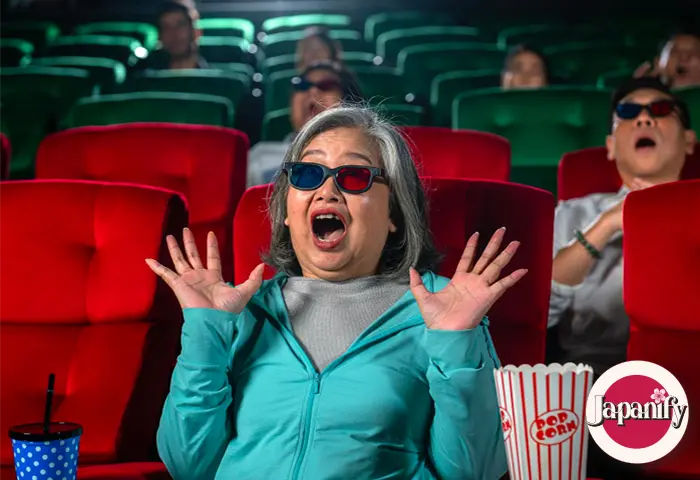
Lesson 17: 映画を見に行きました – I Went to See a Movie (Past Tense) image

Key topics:

  • ・Talking about past activities
  • ・Describing weekend plans
  • ・Entertainment and leisure activities
  • ・Expressing opinions and feelings
  • ・Cultural events and places
  • ・Using past tense verbs

Vocabulary

1
うんどうする
undou suru
運動うんどうする
to exercise
Example
まいあさ うんどうします.
Maiasa undou shimasu.
I exercise every morning.
2
そうじする
souji suru
掃除そうじする
to clean
Example
どようびにへやをそうじします.
Doyoubi ni heya o souji shimasu.
I clean the room on Saturdays.
3
つく
tsuku
着つく
to arrive
Example
えいがかんにつきました.
Eigakan ni tsukimashita.
I arrived at the movie theater.
4
はなす
hanasu
話はなす
to talk
Example
ともだちとはなしました.
Tomodachi to hanashimashita.
I talked with friends.
5
のみにいく
nomi ni iku
飲のみに行いく
to go drinking
Example
ともだちとのみにいきました.
Tomodachi to nomi ni ikimashita.
I went drinking with friends.
6
だいどころ
daidokoro
台所だいどころ
kitchen
Example
だいどころでりょうりをします.
Daidokoro de ryouri o shimasu.
I cook in the kitchen.
7
おふろ
ofuro
お風呂ふろ
bathroom
Example
おふろにはいります.
Ofuro ni hairimasu.
I take a bath.
8
いちにちじゅう
ichinichijuu
一いち日にち中いちにちじゅう
all day long
Example
いちにちじゅう うちにいました.
Ichinichijuu uchi ni imashita.
I was at home all day long.
9
どにち
donichi
土日どにち
Saturday and Sunday
Example
どにちはいそがしい です.
Donichi wa isogashii desu.
Saturdays and Sundays are busy.
10
しゅうまつ
shuumatsu
週末しゅうまつ
weekend
Example
しゅうまつはなにをしますか.
Shuumatsu wa nani o shimasu ka.
What do you do on weekends?
11
やすみ
yasumi
-
off
Example
きんようびはやすみです.
Kinyoubi wa yasumi desu.
Friday is off.
12
おとな
otona
大人おとな
adult
Example
おとなの チケットをかいました.
Otona no chiketto o kaimashita.
I bought adult tickets.
13
おひとりさま
ohitorisama
お一人ひとり様ひとりさま
one person
Example
おひとりさま ですか.
Ohitorisama desu ka.
Is it for one person?
14
かぞくで
kazoku de
家族かぞくで
with family
Example
かぞくで りょこうします.
Kazoku de ryokou shimasu.
I travel with family.
15
さいいじょう
sai ijou
歳とし以上さいいじょう
aged __ or above
Example
じゅうはっさいいじょう です.
Juuhatsu sai ijou desu.
Aged 18 or above.
16
しょうちゅうがくせい
shouchuugakusei
小しょうちゅうがくせい・中学ちゅうがく生せい()
elementary & junior high school student
Example
しょうちゅうがくせいは やすく です.
Shouchuugakusei wa yasuku desu.
It's cheaper for elementary and junior high school students.
17
こうこうせい
koukousei
高校こうこう生こうこうせい
high school student
Example
こうこうせいの とき、よく えいがにいきました.
Koukousei no toki, yoku eiga ni ikimashita.
When I was a high school student, I often went to movies.
18
すいぞくかん
suizokukan
水族すいぞく館すいぞくかん
aquarium
Example
すいぞくかんにいきました.
Suizokukan ni ikimashita.
I went to the aquarium.
19
こしつ
koshitsu
個室こしつ
private room
Example
こしつで たべました.
Koshitsu de tabemashita.
I ate in a private room.
20
すしや
sushiya
寿司すし屋すしや
sushi restaurant
Example
すしやで たべました.
Sushiya de tabemashita.
I ate at a sushi restaurant.
21
ブース
buusu
-
booth
Example
にんきの ブースで たべました.
Ninki no buusu de tabemashita.
I ate at a popular booth.
22
チケット
chiketto
-
ticket
Example
えいがの チケットをかいました.
Eiga no chiketto o kaimashita.
I bought movie tickets.
23
にゅうかんけん
nyuukanken
入館にゅうかん券にゅうかんけん
admission ticket
Example
にゅうかんけんをかいました.
Nyuukanken o kaimashita.
I bought admission tickets.
24
パック
pakku
-
package
Example
ツアーの パックをかいました.
Tsuaa no pakku o kaimashita.
I bought a tour package.
25
たべほうだい
tabehoudai
食たべ放題ほうだい
all you can eat
Example
たべほうだいの レストランにいきました.
Tabehoudai no resutoran ni ikimashita.
I went to an all-you-can-eat restaurant.
26
のみほうだい
nomihoudai
飲のみ放題ほうだい
all you can drink
Example
のみほうだいの ぷらんをえらびました.
Nomihoudai no puran o erabimashita.
I chose the all-you-can-drink plan.
27
コスモス
kosumosu
-
cosmos
Example
コスモスの はなをみました.
Kosumosu no hana o mimashita.
I saw cosmos flowers.
28
はな
hana
花はな
flower
Example
はなをみに いきました.
Hana o mi ni ikimashita.
I went to see flowers.
29
クラゲ
kurage
-
jellyfish
Example
クラゲをみました.
Kurage o mimashita.
I saw jellyfish.
30
ペンギン
pengin
-
penguin
Example
ペンギンがすき です.
Pengin ga suki desu.
I like penguins.
31
オーケストラ
ookesutora
-
orchestra
Example
オーケストラの コンサートにいきました.
Ookesutora no konsaato ni ikimashita.
I went to an orchestra concert.
32
コンサート
konsaato
-
concert
Example
コンサートにいきました.
Konsaato ni ikimashita.
I went to a concert.
33
おいわい
oiwai
お祝しゅく()い
celebration
Example
たんじょうびの おいわいをしました.
Tanjoubi no oiwai o shimashita.
I had a birthday celebration.
34
ひろきん
ryoukin
料金ひろきん
fee
Example
ひろきんはいくら ですか.
Ryoukin wa ikura desu ka.
How much is the fee?
35
ねっとで
netto de
ネットで
online
Example
ねっとで チケットをかいました.
Netto de chiketto o kaimashita.
I bought tickets online.
36
どこにも
doko ni mo
-
nowhere
Example
しゅうまつはどこにも いきませんでした.
Shuumatsu wa doko ni mo ikimasen deshita.
I didn't go anywhere on the weekend.
37
いい
ii
-
good
Example
えいがはいいです.
Eiga wa ii desu.
The movie is good.
38
おもしろい
omoshiroi
-
interesting
Example
おもしろいほんです.
Omoshiroi hon desu.
It's an interesting book.
39
きもちいい
kimochiii
気持きもちいい
refreshing
Example
うみはきもちいい です.
Umi wa kimochiii desu.
The sea is refreshing.
40
たのしい
tanoshii
楽たのしい
fun
Example
パーティーは たのしかったです.
Paatii wa tanoshikatta desu.
The party was fun.
41
つまらない
tsumaranai
-
boring
Example
えいがはつまらない です.
Eiga wa tsumaranai desu.
The movie is boring.
42
げんきな
genki na
元気げんきな
healthy
Example
うんどうはげんきなからだにいいです.
Undou wa genki na karada ni ii desu.
Exercise is good for a healthy body.
43
いまいちな
imaichi na
-
not so good
Example
えいがはいまいち です.
Eiga wa imaichi desu.
The movie is not so good.
44
おおい
ooi
多おおい
many
Example
きんじょにおおいひとがいます.
Kinjo ni ooi hito ga imasu.
There are many people in the neighborhood.
45
すばらしい
subarashii
-
wonderful
Example
けしきはすばらしい です.
Keshiki wa subarashii desu.
The scenery is wonderful.
46
たいへんな
taihen na
大変たいへんな
awful / tough
Example
しごとはたいへん です.
Shigoto wa taihen desu.
Work is tough.
47
まあまあな
maamaa na
-
average
Example
えいがはまあまあ です.
Eiga wa maamaa desu.
The movie is average.
48
はじめて
hajimete
-
for the first time
Example
はじめて すいぞくかんにいきました.
Hajimete suizokukan ni ikimashita.
I went to the aquarium for the first time.
49
また
mata
-
again
Example
また いきたい です.
Mata ikitai desu.
I want to go again.
50
まだ
mada
-
still
Example
まだしごとがおわりません.
Mada shigoto ga owarimasen.
Work is not yet finished.
51
そして
soshite
-
then
Example
えいがをみて、そして しょくじしました.
Eiga o mite, soshite shokuji shimashita.
I watched a movie, and then had a meal.
52
どう
dou
-
how
Example
えいがはどう でしたか.
Eiga wa dou deshita ka.
How was the movie?

Conversation

1
きのう、えいがをみました.
Kinou, eiga o mimashita.
I watched a movie yesterday.
Example Usage
しゅうまつはなにをしましたか.きのう、えいがをみました.
Shuumatsu wa nani o shimashita ka. Kinou, eiga o mimashita.
What did you do on the weekend? I watched a movie yesterday.
2
ともだちといきました.
Tomodachi to ikimashita.
I went with friends.
Example Usage
だれといきましたか.ともだちといきました.
Dare to ikimashita ka. Tomodachi to ikimashita.
Who did you go with? I went with friends.
3
えいがはどう でしたか.
Eiga wa dou deshita ka.
How was the movie?
Example Usage
きのうの えいがはどう でしたか.
Kinou no eiga wa dou deshita ka.
How was yesterday's movie?
4
おもしろかったです.
Omoshirokatta desu.
It was interesting.
Example Usage
えいがはどう でしたか.おもしろかったです.
Eiga wa dou deshita ka. Omoshirokatta desu.
How was the movie? It was interesting.
5
また いきたい です.
Mata ikitai desu.
I want to go again.
Example Usage
その すいぞくかんはよかった です.また いきたい です.
Sono suizokukan wa yokatta desu.Mata ikitai desu.
That aquarium was good. I want to go again.

Kanji

1
日本語
Japanese language
日🎬
Japan, sun
本🎬
origin, book
語🎬
language
Example
日本にっぽん語ごを勉強べんきょうします.
Nihongo o benkyō shimasu.
I study Japanese.
2
百ひゃく
hundred
百🎬
hundred
Example
百ひゃく円えんです.
Hyaku en desu.
It's 100 yen.
3
千せん
thousand
千🎬
thousand
Example
千せん円えんです.
Sen en desu.
It's 1,000 yen.
4
万まん
ten thousand
万🎬
ten thousand
Example
一いち万まん円えんです.
Ichiman en desu.
It's 10,000 yen.
5
__ 円
yen (Japanese currency)
円🎬
yen, circle
Example
五百ごひゃく円えんです.
Gohyaku en desu.
It's 500 yen.
6
休やすみ
rest, holiday, day off
休🎬
rest
Example
明日あしたは休やすみです.
Ashita wa yasumi desu.
Tomorrow is a day off.
7
映画えいが
movie, film
映🎬
reflect, project
画🎬
picture, painting
Example
映画えいがを見みます.
Eiga o mimasu.
I watch a movie.
8
勉強べんきょうします
to study
勉🎬
exertion
強🎬
strong
Example
毎日まいにち勉強べんきょうします.
Mainichi benkyō shimasu.
I study every day.
9
買かいます
to buy
買🎬
buy
Example
本ほんを買かいます.
Hon o kaimasu.
I buy a book.

Grammar Rules

Rule 1: Talking about past actions politely

Structure: V-ました / V-ませんでした

These expressions state something that happened in the past. They are used to talk about what one did on a day off. The positive past changes ~ます to ~ました, and the negative past changes ~ません to ~ませんでした.

How to use: Use V-ました for a polite past affirmative and V-ませんでした for a polite past negative. The non-past forms are V-ます and V-ません. The question form is V-ましたか?, and the negative question is V-ませんでしたか?. In casual speech, use the た-form and なかった form, such as 見みた and 見みなかった.
💡 Pro Tip: Do not use でした with verbs; 見みましたでした is wrong. The past negative is ませんでした, not ましたじゃないです. する verbs change to しました and しませんでした. Register: ~ました is polite; ~た is casual.
FormPast Form
V-ますV-ました
V-ませんV-ませんでした
ゆっくりしますゆっくりしました
運動うんどうします運動うんどうしました
見みます見みました
掃除そうじします掃除そうじしました
行いきます行いきました
買かいます買かいました
ねますねました
話はなします話はなしました
しませんしませんでした
Examples
しゅうまつは、何なにもしませんでした.家いえでゆっくりしました.
Shūmatsu wa, nanimo shimasen deshita. Ie de yukkuri shimashita.
I didn't do anything on the weekend. I relaxed at home.
きのう、友ともだちと映画えいがを見みました.
Kinō, tomodachi to eiga o mimashita.
Yesterday, I watched a movie with a friend.

Rule 2: Saying you did nothing or went nowhere

Structure: 何なにも / どこにも + V-ませんでした

These expressions emphasize a negative statement in the past. 何なにも with a negative verb means 'did nothing.' どこにも with a negative motion verb means 'did not go anywhere.' They are used to answer questions about what one did on a day off.

How to use: Use 何なにも + V-ませんでした for 'did nothing' and どこにも + V-ませんでした for 'did not go anywhere.' 何なにも pairs with negative verbs, and どこにも pairs with motion verbs such as 行いく. The question forms are 何なにをしましたか? and どこに行いきましたか?. In casual speech, use 何なにもしなかった and どこにも行いかなかった.
💡 Pro Tip: These words require a negative verb; 何なにもしました is wrong. 何なにか is for 'something' in affirmative sentences. どこにも uses も for emphasis; contrast it with どこか (somewhere). Do not confuse どこにも with どこでも (anywhere/everywhere).
Examples
しゅうまつは、何なにもしませんでした.
Shūmatsu wa, nanimo shimasen deshita.
I didn't do anything on the weekend.
夏休なつやすみは、どこにも行いきませんでした.
Natsuyasumi wa, doko ni mo ikimasen deshita.
I didn't go anywhere during summer vacation.

Rule 3: Describing past impressions with adjectives

Structure: ナA + でした / イA + かったです

These expressions state impressions about something that happened in the past. For ナ-adjectives, change ~です to ~でした. For イ-adjectives, change ~いです to ~かったです. いい is a special case: its past form is よかったです.

How to use: Use ナA + でした for ナ-adjectives and イA(-い) + かったです for イ-adjectives. To ask for someone's impressions, use どうでしたか?. The negative past is covered by the ~じゃなかったです / ~くなかったです pattern. In casual speech, でした becomes だった and かったです becomes かった.
💡 Pro Tip: Do not use でした with イ-adjectives: say 楽たのしかったです, not 楽たのしいでした. いい is irregular: よかったです, not いかったです. きれい is a ナ-adjective even though it ends in い, so say きれいでした. Register: ~かったです is polite; ~かった is casual.
FormPast Form
まあまあですまあまあでした
たいへんですたいへんでした
いまいちですいまいちでした
楽たのしいです楽たのしかったです
いいですよかったです
おもしろいですおもしろかったです
Examples
「ゴジラ」は、まあまあでした.
Gojira wa, maa maa deshita.
"Godzilla」was okay.
先週せんしゅうの映画えいがは、とてもおもしろかったです.
Senshū no eiga wa, totemo omoshirokatta desu.
Last week's movie was very interesting.

Rule 4: Saying what something was in the past

Structure: N + でした

This expression is the past tense of a nominal sentence. It is used to talk about something that happened in the past. Change the end of the sentence from ~です to ~でした.

How to use: Use N + でした. The question form is N + でしたか?. The negative past is N + じゃなかったです, covered separately. In casual speech, でした becomes だった. Examples: いい天気てんきでした, 誕生日たんじょうびでした, 休やすみでした, 雨あめでした.
💡 Pro Tip: Do not use でした with イ-adjectives; say 雨あめでした for nouns but 楽たのしかったです for adjectives. でした is polite; だった is casual. 雨あめでした can mean 'it was rain' or 'it rained.'
Examples
とてもいい天気てんきでした.
Totemo ii tenki deshita.
The weather was great.
きのうは、休やすみでした.
Kinō wa, yasumi deshita.
Yesterday was a day off.

Rule 5: Saying something was not in the past

Structure: N + じゃなかったです / ナA + じゃなかったです / イA + くなかったです

These are the negative forms of nominal and adjectival sentences in the past tense. They are used to discuss impressions or comments about something that happened in the past. ~なかった is used for negative past expressions. For nouns and ナ-adjectives, change ~じゃないです to ~じゃなかったです. For イ-adjectives, change ~くないです to ~くなかったです.

How to use: Use N + じゃなかったです and ナA + じゃなかったです for nouns and ナ-adjectives. Use イA(-い) + くなかったです for イ-adjectives. More formal alternatives are ではありませんでした and くありませんでした. The question form is ~じゃなかったですか? or ~くなかったですか?. In casual speech, use ~じゃなかった and ~くなかった.
💡 Pro Tip: じゃなかったです is common in speech; ではなかったです is more formal or written. Do not say おいしいじゃなかったです; the correct form is おいしくなかったです. いい is irregular: よくなかったです. きれい is a ナ-adjective, so きれいじゃなかったです is correct.
TypePast FormNegative Form
Noun雨あめでした雨あめじゃなかったです
ナAきれいでしたきれいじゃなかったです
イA楽たのしかったです楽たのしくなかったです
Examples
おきゃくさんは、あまり多おおくなかったです.
Okyakusan wa, amari ōkunakatta desu.
There weren't very many guests.
この店みせは、あまりしずかじゃなかったです.
Kono mise wa, amari shizuka ja nakatta desu.
This shop wasn't very quiet.

Exercises

Question 1

'Yesterday, I watched a movie with a friend.'

きのう、ともだちと えいがを ______.

Question 2

'I didn't do anything on the weekend.'

しゅうまつは、なにも ______.

Question 3

How do you ask 'What did you do on the weekend?'

Question 4

'I didn't do anything on the weekend. I relaxed at home.'

しゅうまつは、______ しませんでした.うちで ゆっくりしました.

Question 5

How do you say 'I didn't go anywhere during summer vacation.'?

Question 6

'Last week's movie was very interesting.'

せんしゅうの えいがは、とても ______.

Question 7

How do you say '」Godzilla」was okay.'?

Question 8

'The weather was great.'

とても いい てんき ______.

Question 9

'Yesterday was a day off.'

きのうは、やすみ ______.

Question 10

How do you say 'It wasn't rain yesterday.'?

Question 11

How do you say 'This shop wasn't very quiet.'?

Question 12

Choose the correct reading of 日本語.

Question 13

Choose the correct reading of 百.

Question 14

Choose the correct reading of 千.

Question 15

Choose the correct reading of 万.

Question 16

Choose the correct reading of 円 in 五百円.

Question 17

Choose the correct reading of 休み.

Question 18

Choose the correct reading of 映画.

Question 19

Choose the correct reading of 勉強します.

Question 20

Choose the correct reading of 買います.

Question 21

Which is correct: 'I went to the aquarium for the first time. I saw jellyfish and penguins.'

Question 22

Which is correct: 'The movie was interesting, but the shop wasn't very quiet.'

On'yomi:
Kun'yomi: