
Japanify

Lesson 12: いっしょにのみに行きませんか – Inviting Friends Out in Japanese

Making plans and invitations

Learn vocabulary for making invitations, discussing plans, and talking about events. This lesson focuses on social invitations, dates, and event-related vocabulary.
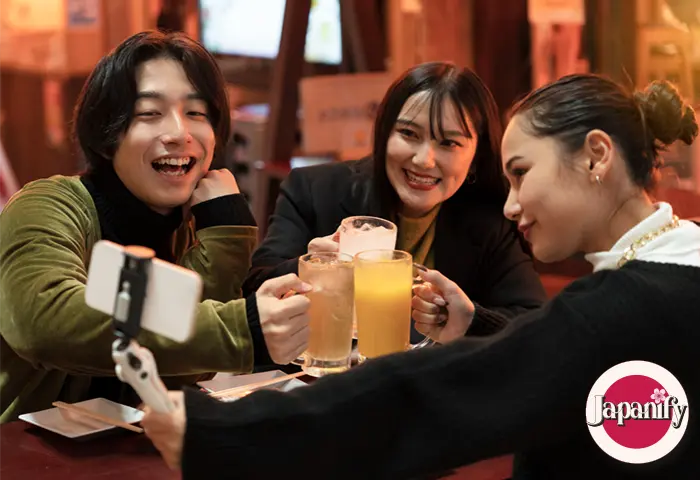
Lesson 12: いっしょにのみに行きませんか – Inviting Friends Out in Japanese image

Key topics:

  • ・Making invitations and suggestions
  • ・Talking about dates and times
  • ・Event and festival vocabulary
  • ・Social activities and gatherings
  • ・Months and dates in Japanese
  • ・Accepting and declining invitations

Vocabulary

1
あう
au
会あう
to meet
Example
あした あいましょう.
Ashita aimashou.
Let's meet tomorrow.
2
あそぶ
asobu
遊あそぶ
to play/hang out
Example
こうえんで あそびませんか.
Kouen de asobimasen ka.
Would you like to hang out at the park?
3
いく
iku
行いく
to go
Example
がっこうにいきます.
Gakkou ni ikimasu.
I go to school.
4
たのしい
tanoshii
楽たのしい
fun
Example
パーティーは たのしかったです.
Paatii wa tanoshikatta desu.
The party was fun.
5
おととい
ototoi
一昨いっさく日おととい
day before yesterday
Example
おととい えいがを みました.
Ototoi eiga o mimashita.
I watched a movie the day before yesterday.
6
きのう
kinou
昨日きのう
yesterday
Example
きのう ともだちに あいました.
Kinou tomodachi ni aimashita.
I met a friend yesterday.
7
きょう
kyou
今日きょう
today
Example
きょうのばんごはんはなんですか?
Kyou no bangohan wa nan desu ka?
What is today's dinner?
8
あした
ashita
明日あした
tomorrow
Example
あした あいましょう.
Ashita aimashou.
Let's meet tomorrow.
9
あさって
asatte
-
day after tomorrow
Example
あさって あいましょう.
Asatte aimashou.
Let's meet the day after tomorrow.
10
こんばん
konban
今晩こんばん
this evening
Example
こんばん ひまですか.
Konban hima desu ka.
Are you free this evening?
11
こんしゅう
konshuu
今週こんしゅう
this week
Example
こんしゅうの どようびです.
Konshuu no doyoubi desu.
It's this Saturday.
12
らいしゅう
raishuu
来週らいしゅう
next week
Example
らいしゅうの すいようびです.
Raishuu no suiyoubi desu.
It's next Wednesday.
13
こんど
kondo
今度こんど
next / next time
Example
こんど あいましょう.
Kondo aimashou.
Let's meet next time.
14
がつ
gatsu
月がつ
month of the year
Example
なんがつですか.
Nangatsu desu ka.
What month is it?
15
にち
nichi
日にち
day of the month
Example
なんにちですか.
Nannichi desu ka.
What day of the month is it?
16
にちじ
nichiji
日時にちじ
date and time
Example
にちじを おしえてください.
Nichiji o oshiete kudasai.
Please tell me the date and time.
17
ねん
nen
年ねん
year
Example
なんねんですか.
Nannen desu ka.
What year is it?
18
いちがつ
ichigatsu
1月ちがつ
January
Example
いちがつ ついたちは がんたんです.
Ichigatsu tsuitachi wa gantan desu.
January 1st is New Year's Day.
19
しがつ
shigatsu
4月がつ
April
Example
しがつに がっこうが はじまります.
Shigatsu ni gakkou ga hajimarimasu.
School starts in April.
20
しちがつ
shichigatsu
7月ちがつ
July
Example
しちがつは なつです.
Shichigatsu wa natsu desu.
July is summer.
21
くがつ
kugatsu
9月がつ
September
Example
くがつに つきみに いきます.
Kugatsu ni tsukimi ni ikimasu.
I go moon viewing in September.
22
じゅうにがつ
juunigatsu
12月うにがつ
December
Example
じゅうにがつに くりすますがあります.
Juunigatsu ni kurisumasu ga arimasu.
There's Christmas in December.
23
ついたち
tsuitachi
1日いたち
1st (day of the month)
Example
しがつ ついたちです.
Shigatsu tsuitachi desu.
It's April 1st.
24
ふつか
futsuka
2日つか
2nd (day of the month)
Example
ごがつ ふつかです.
Gogatsu futsuka desu.
It's May 2nd.
25
みっか
mikka
3日っか
3rd (day of the month)
Example
くがつ みっかです.
Kugatsu mikka desu.
It's September 3rd.
26
よっか
yokka
4日っか
4th (day of the month)
Example
じゅうがつ よっかです.
Juugatsu yokka desu.
It's October 4th.
27
いつか
itsuka
5日つか
5th (day of the month)
Example
しちがつ いつかです.
Shichigatsu itsuka desu.
It's July 5th.
28
むいか
muika
6日いか
6th (day of the month)
Example
いちがつ むいかです.
Ichigatsu muika desu.
It's January 6th.
29
なのか
nanoka
7日のか
7th (day of the month)
Example
にがつ なのかです.
Nigatsu nanoka desu.
It's February 7th.
30
ようか
youka
8日うか
8th (day of the month)
Example
さんがつ ようかです.
Sangatsu youka desu.
It's March 8th.
31
ここのか
kokonoka
9日このか
9th (day of the month)
Example
ろくがつ ここのかです.
Rokugatsu kokonoka desu.
It's June 9th.
32
とおか
tooka
10日か
10th (day of the month)
Example
はちがつ とおかです.
Hachigatsu tooka desu.
It's August 10th.
33
じゅうよっか
juuyokka
14日うよっか
14th (day of the month)
Example
しがつ じゅうよっかです.
Shigatsu juuyokka desu.
It's April 14th.
34
はつか
hatsuka
20日か
20th (day of the month)
Example
じゅうがつ はつかです.
Juugatsu hatsuka desu.
It's October 20th.
35
にじゅうよっか
nijuuyokka
24日ゅうよっか
24th (day of the month)
Example
ごがつ にじゅうよっかです.
Gogatsu nijuuyokka desu.
It's May 24th.
36
イベント
ibento
-
event
Example
たのしい イベントです.
Tanoshii ibento desu.
It's a fun event.
37
こうりゅう
kouryuu
交流こうりゅう
exchange
Example
日本にっぽん語ご こうりゅうかいがあります.
Nihongo kouryuu kai ga arimasu.
There's a Japanese language exchange meeting.
38
なつまつり
natsumatsuri
夏祭なつまつり
summer festival
Example
なつまつりに いきませんか.
Natsumatsuri ni ikimasen ka.
Would you like to go to the summer festival?
39
パーティー
paatii
-
party
Example
たんじょうびパーティーを します.
Tanjoubi paatii o shimasu.
I'll have a birthday party.
40
ぼうねんかい
bounenkai
忘年ぼうねん会ぼうねんかい
year-end party
Example
しごとの ぼうねんかいがあります.
Shigoto no bounenkai ga arimasu.
There's a work year-end party.
41
しあい
shiai
試合しあい
match / game
Example
やきゅうの しあいを みます.
Yakyuu no shiai o mimasu.
I'll watch a baseball game.
42
フェスティバル
fesutibaru
-
festival
Example
フェスティバルが あります.
Fesutibaru ga arimasu.
There's a festival.
43
ばしょ
basho
場所ばしょ
place
Example
ばしょを おしえてください.
Basho o oshiete kudasai.
Please tell me the place.
44
ひろば
hiroba
広場ひろば
square
Example
えきまえの ひろばで あいましょう.
Ekimae no hiroba de aimashou.
Let's meet at the square in front of the station.
45
ホール
hooru
-
hall
Example
しちょうの ホールで あります.
Shichou no hooru de arimasu.
It's at the city hall.
46
かいじょう
kaijou
会場かいじょう
venue
Example
かいじょうは どこですか.
Kaijou wa doko desu ka.
Where is the venue?
47
ちゅうしゃじょう
chuushajou
駐車ちゅうしゃ場ちゅうしゃじょう
parking lot
Example
ちゅうしゃじょうが ありますか.
Chuushajou ga arimasu ka.
Is there a parking lot?
48
やきにく
yakiniku
焼肉やきにく
yakiniku (Japanese grilled meat)
Example
やきにくに いきませんか.
Yakiniku ni ikimasen ka.
Would you like to go for yakiniku?
49
バーベキュー
baabekyuu
-
barbecue
Example
バーベキューを しましょう.
Baabekyuu o shimashou.
Let's have a barbecue.
50
にゅうじょうりょう
nyuujou ryou
入場にゅうじょう料にゅうじょうりょう
entry fee
Example
にゅうじょうりょうは ひゃくえんです.
Nyuujou ryou wa hyaku en desu.
The entry fee is 100 yen.
51
からて
karate
空手からて
karate
Example
からての しあいがあります.
Karate no shiai ga arimasu.
There's a karate match.
52
はいきんぐ
haikingu
ハイキング
hiking
Example
やまに はいきんぐに いきます.
Yama ni haikingu ni ikimasu.
I go hiking in the mountains.
53
いっしょに
issho ni
-
together
Example
いっしょに いきませんか.
Issho ni ikimasen ka.
Would you like to go together?
54
もちろん
mochiron
-
of course
Example
もちろん、いきます.
Mochiron, ikimasu.
Of course, I'll go.

Conversation

1
いっしょに いきませんか.
Issho ni ikimasen ka.
Would you like to go together?
Example Usage
えいがに いっしょに いきませんか.
Eiga ni issho ni ikimasen ka.
Would you like to go to a movie together?
2
いいですね.
Ii desu ne.
That sounds good.
Example Usage
あした えいが?いいですね.
Ashita eiga? Ii desu ne.
A movie tomorrow? That sounds good.
3
なんじに しましょうか.
Nan-ji ni shimashou ka.
What time should we make it?
Example Usage
えきまえで なんじに しましょうか.
Ekimae de nan-ji ni shimashou ka.
What time should we meet in front of the station?
4
さんじは どうですか.
San-ji wa dou desu ka.
How about 3 o'clock?
Example Usage
あさっての さんじは どうですか.
Asatte no san-ji wa dou desu ka.
How about 3 o'clock the day after tomorrow?
5
じゃあ、さんじに しましょう.
Jaa, san-ji ni shimashou.
Well then, let's make it 3 o'clock.
Example Usage
じゃあ、えきまえで さんじに しましょう.
Jaa, ekimae de san-ji ni shimashou.
Well then, let's meet at the station at 3 o'clock.

Kanji

1
今日きょう
today
今🎬
now
日🎬
day
Example
きょうの よる ひまですか.
Kyou no yoru hima desu ka.
Are you free tonight?
2
明日あした
tomorrow
明🎬
bright, next
日🎬
day
Example
あした あいましょう.
Ashita aimashou.
Let's meet tomorrow.
3
昨日きのう
yesterday
昨🎬
yesterday, previous
日🎬
day
Example
きのう ともだちに あいました.
Kinou tomodachi ni aimashita.
I met a friend yesterday.
4
一昨日おととい
day before yesterday
一🎬
one
昨🎬
yesterday, previous
日🎬
day
Example
おととい えいがを みました.
Ototoi eiga o mimashita.
I watched a movie the day before yesterday.
5
今晩こんばん
this evening
今🎬
now
晩🎬
evening
Example
こんばん ひまですか.
Konban hima desu ka.
Are you free this evening?
6
今週こんしゅう
this week
今🎬
now
週🎬
week
Example
こんしゅうの どようびです.
Konshuu no doyoubi desu.
It's this Saturday.
7
来週らいしゅう
next week
来🎬
next, come
週🎬
week
Example
らいしゅうの すいようびです.
Raishuu no suiyoubi desu.
It's next Wednesday.
8
今度こんど
next / next time
今🎬
now
度🎬
time, occasion
Example
こんど あいましょう.
Kondo aimashou.
Let's meet next time.

Grammar Rules

Rule 1: Saying when and where an event takes place

Structure: [Date/Time] + に + [Place] + で + [Event] + が + あります

These expressions are for sharing that there will be an event by giving the date, time, and place. The date and time are indicated with に, the location with で, and the event with が + あります.

How to use: Use [Date/Time] + に for specific times such as 日曜日にちようびに, 12月がつ20日にちに, and 7時ときに. However, に may be omitted in spoken language, and it is not added to words such as 明日あした and 来週らいしゅう. Use [Place] + で for the event location, as in さくら公園こうえんで. The question form is [Event] + が + ありますか.The negative is [Event] + は + ありません.
💡 Pro Tip: Use に for specific dates and times, but で for the place where the event happens. Do not say 日曜日にちようびで for the date or さくら公園こうえんに for the event location. あります is used for events and things, not for people or animals.
Examples
日曜にちよう日にちようびに、さくら公園こうえんでタイフェスティバルがありますね.
Nichiyoubi ni, Sakura kouen de Tai fesutibaru ga arimasu ne.
There is a Thai festival at Sakura Park on Sunday.
12月がつ20日にちに、こうえんでコンサートがあります.
Juunigatsu hatsuka ni, kouen de konsaato ga arimasu.
There is a concert in the park on December 20th.

Rule 2: Saying you are going to an event

Structure: [Event/Action Noun] + に + 行いきます

This expression indicates the purpose of going. It is used to ask whether someone is going to an event. The particle に indicates the purpose when it follows a noun representing an event or action, such as ぼう年会ねんかい, 映画えいが, しごう, or 散歩さんぽ. It is used together with the verb 行いく.

How to use: Use [Event/Action Noun] + に + 行いきます.The question form is [Event] + に + 行いきますか.The negative is 行いきません.In casual speech, 行いく? and 行いかない are used. The particle に here marks the event or activity you are going to.
💡 Pro Tip: Do not use を with 行いきます; say ぼう年会ねんかいに行いきます, not ぼう年会ねんかいを行いきます. に marks the purpose or destination, while で marks the place where an action happens. For direction, へ can sometimes replace に, but this pattern keeps に.
Examples
明日あしたのぼうねんかいに行いきますか?
Ashita no bounenkai ni ikimasu ka?
Are you going to the year-end party tomorrow?
日曜にちよう日にちようびにしあいに行いきます.
Nichiyoubi ni shiai ni ikimasu.
I'm going to a game on Sunday.

Rule 3: Inviting someone to do something

Structure: V-ませんか?

This expression is for inviting the other person. Change ます, the マス-form suffix of the verb, to ませんか?. It politely asks whether the other person would like to do something together.

How to use: Use V-ませんか? for a polite invitation. Example: いっしょに行いきませんか?.For a casual invitation, use V-ない?.A related positive suggestion is V-ましょう.The form is already negative in shape, but it functions as an invitation rather than a plain negative question.
💡 Pro Tip: V-ませんか? is a polite invitation, while V-ましょう is a stronger suggestion. Do not confuse ませんか? with a negative question asking whether someone does not do something. Rising intonation makes the invitation clear.
Examples
いっしょに行いきませんか?
Issho ni ikimasen ka?
Do you want to go together?
あした、いっしょに昼ひるごはんを食たべませんか?
Ashita, issho ni hirugohan o tabemasen ka?
Would you like to have lunch together tomorrow?

Rule 4: Saying you are going somewhere to do something

Structure: V-に + 行いきます

This expression indicates the purpose of going using verbs. It is used here to invite the other person with V-に行いきませんか?.Remove ます from the マス-form of the verb and add the particle に, as in 食たべに.

How to use: Use V-ます stem + に + 行いきます.For an invitation, use V-に + 行いきませんか?.The negative is V-に + 行いきません.The verb before に must be in its マス-form stem, not the dictionary form.
💡 Pro Tip: Say 食たべに行いきます, not 食たべるに行いきます. The particle に marks the purpose of going. 行いきます can be replaced by other motion verbs in context, but this lesson uses 行いきます.
MasuNi
食(た)べます食(た)べに行(い)きます
聞(き)きます聞(き)きに行(い)きます
飲(の)みます飲(の)みに行(い)きます
見(み)ますみにいきます
Examples
みんなで、いっしょにやきにくを食たべに行いきませんか?
Minna de, issho ni yakiniku o tabe ni ikimasen ka?
Would you like to go and have some yakiniku with everyone?
しゅうまつに友ともだちと映画えいがをみにいきます.
Shuumatsu ni tomodachi to eiga o mi ni ikimasu.
I'm going to see a movie with friends this weekend.

Rule 5: Suggesting doing something together

Structure: V-ましょう

This expression is for suggesting doing something together or telling someone that you will do something together. It is used here to assure that you will go together after being invited, and to suggest doing something at the next opportunity after the invitation is declined.

How to use: Change ます to ましょう.Use V-ましょう for a polite suggestion. A related invitation is V-ませんか?, and a related offer is V-ましょうか?.In casual speech, V-よう is used.
💡 Pro Tip: V-ましょう is a polite suggestion, while V-ませんか? invites the other person to decide. V-ましょうか? often offers to do something for someone. Do not use V-ましょう to give a direct command.
Examples
またこんど行いきましょう.
Mata kondo ikimashou.
Let's go some other time.
いっしょに昼ひるごはんを食たべましょう.
Issho ni hirugohan o tabemashou.
Let's have lunch together.

Exercises

Question 1

'There is a Thai festival at Sakura Park on Sunday.'

日曜日にちようびに、さくら公園こうえん ______ タイフェスティバル ______ あります.

Question 2

How do you ask 'Is there a concert in the park on December 20th?'

Question 3

'Are you going to the year-end party tomorrow?'

明日あしたのぼうねんかい ______ 行いきますか.

Question 4

How do you say 'I'm going to a game on Sunday.'?

Question 5

'Would you like to go together?'

いっしょに ______.

Question 6

Which is a polite invitation?

Question 7

'I'm going to see a movie with friends this weekend.'

しゅうまつに友ともだちと映画えいがを ______ 行いきます.

Question 8

How do you invite someone to go eat yakiniku together?

Question 9

'Let's have lunch together.'

いっしょに昼ひるごはんを ______.

Question 10

What is a positive response to 'いっしょに行いきませんか?'

Question 11

Choose the correct reading of 今日.

Question 12

Choose the correct reading of 明日.

Question 13

Choose the correct reading of 昨日.

Question 14

Choose the correct reading of 一昨日.

Question 15

Choose the correct reading of 今晩.

Question 16

Choose the correct reading of 今週.

Question 17

Choose the correct reading of 来週.

Question 18

Choose the correct reading of 今度.

Question 19

Which is correct: 'There is a summer festival at the park on Sunday.'

Question 20

What is the correct response to 'いっしょに映画えいがを見みませんか?' if you accept?

On'yomi:
Kun'yomi: